

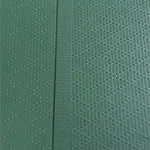
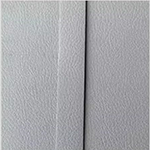

Why Perfect Color Matching Is Critical in Modern Furniture
In modern furniture manufacturing, customers no longer accept visible joints, color differences, or rough edges. A cabinet, wardrobe, or panel may be made from high-quality boards, but if the edge banding color does not match perfectly, the entire product looks cheap and unfinished.
Today’s market demands a seamless look, where the edge banding blends naturally with the board surface. Achieving this requires more than just choosing a similar color – it requires correct material selection, precise color matching, controlled production, and proper processing.
Many manufacturers struggle with color difference between PVC edge banding and laminates, especially when working with wood grain, high-gloss, or textured panels. Even small variations in pigment, printing, or lighting can make the mismatch visible.
In this guide, we explain how to match PVC edge banding colors correctly, what causes color differences, and how professional manufacturers achieve consistent, seamless results.
What Is Color Matching in PVC Edge Banding
Color matching means making the edge banding strip look as close as possible to the panel surface in:
- Color tone
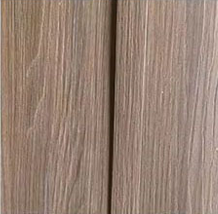
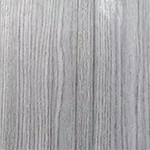
- Wood grain pattern
- Gloss level
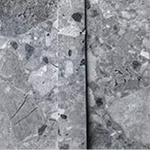
- Texture
- Brightness
- Surface reflection
A perfect match makes the edge invisible after installation, creating a clean and modern design.
Good color matching is important because edge banding is applied to MDF, particleboard, plywood, or laminated panels to protect the edges and improve appearance. If the color does not match, the protection remains, but the visual quality is lost.
Why Color Matching Is Difficult
Matching edge banding to boards is not simple because different materials reflect light differently.
Common reasons for mismatch:
- Different raw materials
- Different printing technology
- Different gloss level
- Different lighting conditions
- Different batches
- Different suppliers
Even if two colors look the same in the factory, they may look different after installation.
Wood grain panels are especially difficult because the pattern of direction, depth, and shade must match.
Step 1 – Use Panel Samples for Accurate Color Matching
Professional color matching should always start with real panel samples.
Why samples are important:
- Photos are not accurate
- Color codes are not always enough
- Lighting changes color appearance
- Grain pattern must be copied
Best practice:
- Provide a panel sample
- Use large sample size
- Match color under controlled light
- Confirm before production
In professional production, customers are usually asked to send panel samples so the laboratory can adjust pigments and printing until the edge banding matches the board.
A proper color matching process may require multiple adjustments before approval to ensure the final product blends naturally with the panel.
Step 2 – Match Not Only Color, But Also Texture and Gloss
Many manufacturers only check color, but texture and gloss are equally important.
Things that must match:
- Matte vs glossy
- Smooth vs embossed
- Deep grain vs light grain
- Warm tone vs cold tone
Examples:
- High-gloss boards need high-gloss edge banding
- Wood grain panels need printed grain edge banding
- Matte boards need matte finish strips
If the gloss level is different, the color will look different even if the pigment is the same.
High-quality edge banding production includes printing, embossing, and coating to reproduce panel texture as closely as possible.
Step 3 – Control Raw Materials for Stable Color
Color consistency starts with raw materials.
Important factors:
- PVC resin quality
- Filler quality
- Pigment stability
- Masterbatch quality
- Printing ink quality
Poor raw materials cause:
- Yellow base color
- Uneven shade
- White edges after trimming
- Color change after heating
Professional factories control the formula carefully to ensure stable color and prevent differences between batches.
In high-precision production, color accuracy can reach over 95% when digital color matching and controlled formulation are used.
Step 4 – Use Controlled Production Process
Even with the same formula, color can change if the production process is not stable.
Important production steps:
- Granulation – controls base color
- Extrusion – controls thickness and surface
- Printing – controls pattern
- Cooling – controls gloss
- Cutting – controls finish
If the temperature or speed changes, color may change.
Professional manufacturers keep strict process control to ensure every roll has the same color and texture.
Full in-house production helps maintain consistency from raw material to finished edge banding.
Step 5 – Check Color Under Real Lighting Conditions
The color looks different under different lights.
Check matching under:
- Daylight
- Workshop light
- Showroom light
- Warm light
- Cold light
This prevents problems after installation.
Good practice:
- Compare edge banding with panel together
- Check from different angles
- Check after trimming
- Check after heating
This ensures the final furniture looks seamless.
Step 6 – Confirm Samples Before Mass Production
One of the biggest mistakes is skipping sample confirmation.
Always:
- Make sample
- Test on machine
- Check trimming result
- Check color after sealing
- Approve before bulk order
This avoids color difference complaints.
Professional factories always send samples for confirmation before mass production to guarantee matching and batch consistency.
Step 7 – Avoid Common Color Matching Problems
Common problems:
- White edges after trimming
- Color darker after heating
- Different gloss after pressing
- Pattern direction mismatch
- Batch color difference
Causes may include:
- Low-quality filler
- Weak printing layer
- Wrong temperature
- Poor cutting tools
- Different raw material batch
Correct material + correct process = perfect finish.
Step 8 – Tips for Getting a Seamless Modern Design Look
To achieve a flawless finish:
- Use correct thickness
- Use correct width
- Match gloss level
- Use high-quality printing
- Confirm samples
- Use stable supplier
Modern furniture design requires invisible edges, smooth corners, and perfect color matching.
Small details make the biggest difference.
Perfect Color Matching Requires Precision, Not Luck
Getting a seamless look with PVC edge banding is not only about choosing a color.
It requires the right sample, correct formula, stable production, and careful confirmation.
When color, texture, gloss, and size are matched correctly, the edge becomes invisible and the furniture looks professional and high-end.
Manufacturers who pay attention to color matching reduce complaints, improve quality, and increase customer satisfaction.
Before your next order, check your matching process – improving this one step can greatly improve the final product.
Call to Action
Check your current edge banding color matching this week.
Does it perfectly match your panels under real lighting?
If not, try sample matching before production and see the difference in final quality.