

How to Select the Perfect Edge Banding for Your Project
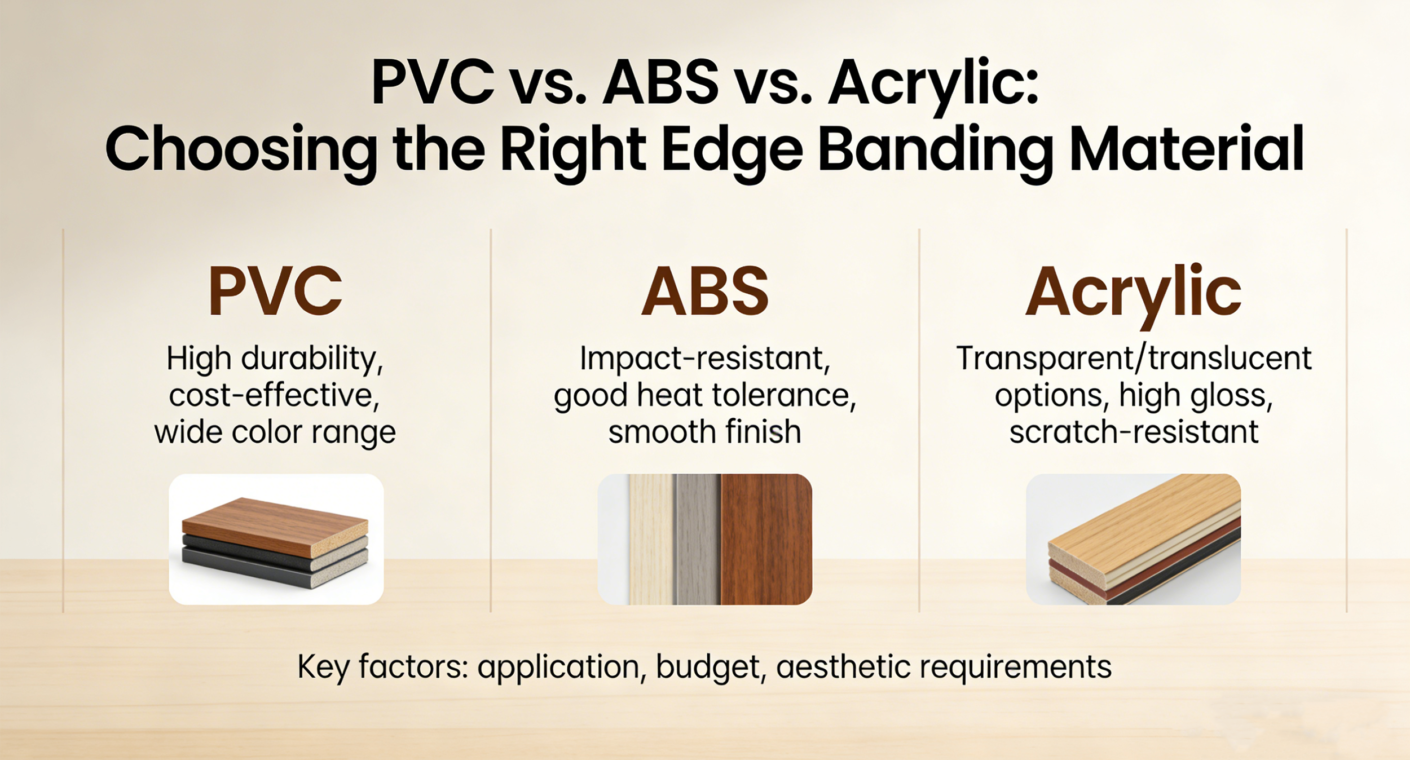
When it comes to edge banding, not all materials are created equal. PVC, ABS, and PP are the three most common types used in the furniture industry, each offering distinct advantages depending on the application. Whether you are manufacturing kitchen cabinets, office desks, or retail fixtures, understanding the differences can help you make an informed choice that balances performance, cost, and environmental considerations.
PVC Edge Banding: The Versatile Workhorse
PVC (polyvinyl chloride) has long been the industry standard for edge banding. It is flexible, durable, and available in an almost unlimited range of colors and patterns. PVC edge banding is particularly well-suited for curved edges and irregular shapes, as it can be easily shaped without cracking. It also offers excellent impact resistance, making it ideal for high-traffic environments. However, because PVC contains chlorine, its production and disposal raise environmental concerns, though modern recycling programs are improving its sustainability profile.
ABS Edge Banding: The Eco-Friendly Alternative
ABS (acrylonitrile butadiene styrene) is a thermoplastic that has gained popularity as a more environmentally friendly substitute for PVC. It is chlorine-free, fully recyclable, and burns without releasing toxic fumes—a key advantage in regions with strict waste incineration regulations. ABS edge banding offers similar durability and flexibility to PVC, with a slightly higher heat resistance. It is an excellent choice for manufacturers seeking to meet green certification standards or appeal to eco-conscious clients.
PP Edge Banding: The Rising Star
PP (polypropylene) is the newest player in the edge banding market, prized for its outstanding chemical resistance and lightweight properties. It is also halogen-free and 100% recyclable. PP edge banding is softer and more elastic than PVC or ABS, which can be beneficial for applications requiring a very tight seal. However, it may require specialized adhesives and application equipment, so it is important to verify compatibility with your production line. As sustainability becomes a priority, PP is emerging as a forward-thinking option.
How to Decide
Choosing the right material ultimately depends on your project’s specific needs. For general-purpose furniture where cost and variety are key, PVC remains a reliable choice. If environmental credentials or end‑of‑life disposal are critical, ABS offers a proven alternative without compromising performance. For applications demanding chemical resistance or where lightweight construction is beneficial, PP is worth exploring. Consulting with your edge banding supplier and testing samples on your own machinery will ensure a perfect match.
Conclusion
The material you choose for edge banding influences not only the final look and feel of your furniture but also its environmental footprint and long-term performance. By understanding the strengths of PVC, ABS, and PP, you can select the option that best aligns with your design goals, production capabilities, and sustainability commitments. In a competitive market, making the right choice—down to the very edge—can set your products apart.